
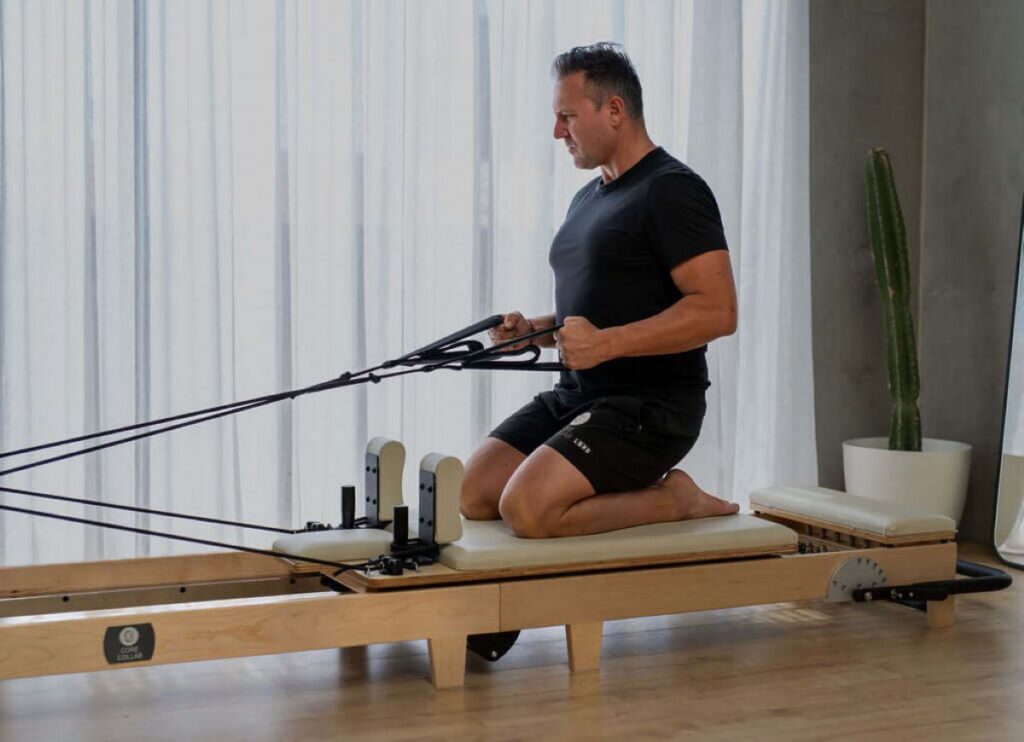
A foldable Pilates reformer can be stable enough for daily use, but stability depends on frame design, locking mechanisms, weight rating, and how it’s set up at home. In Australia, many people choose a foldable Pilates reformer to save space in apartments, spare rooms, and small studios, but it needs the same scrutiny they would give a full-size machine.
This guide breaks down what “stable” really means, what to look for before buying, and how to keep a foldable Pilates reformer feeling solid day after day.
What does “stable enough” actually mean for daily reformer training?
“Stable enough” means the machine stays rigid under load, doesn’t rock on the floor, and keeps the carriage tracking smoothly without wobble. For daily use, stability also includes consistent alignment over time, so it does not loosen after repeated folding, unfolding, and spring changes.
A foldable Pilates reformer should feel predictable in footwork, lunges, standing work, and long stretch, not just in basic supine exercises.
Are foldable frames inherently less stable than fixed reformers?
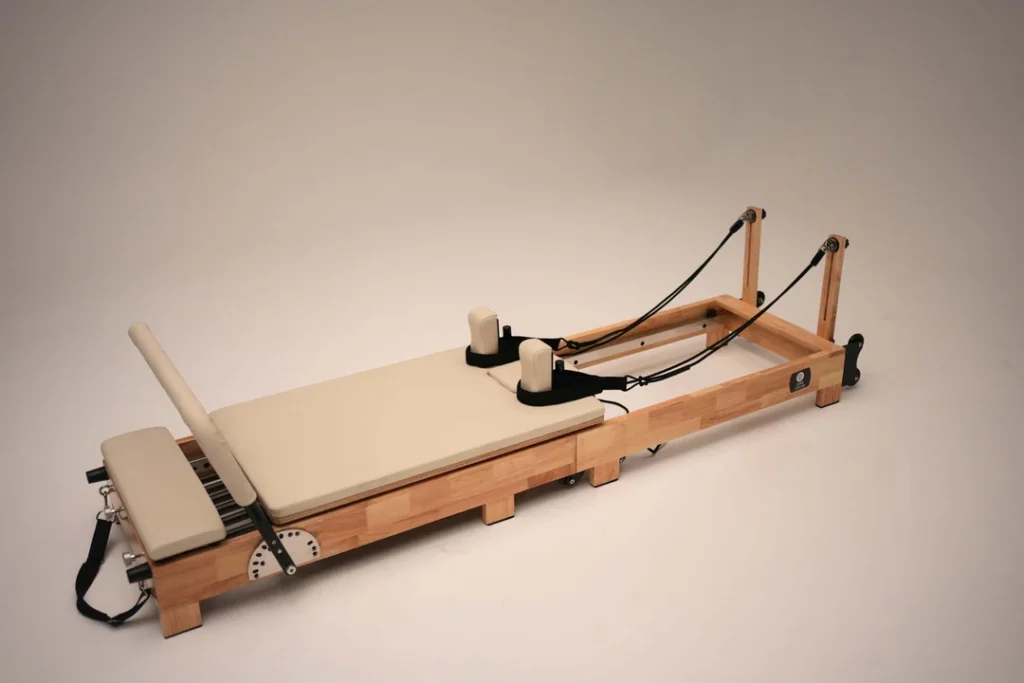
Not inherently, but fold points introduce extra joints, and joints are where movement can develop if tolerances are poor. A well-engineered foldable Pilates reformer uses reinforced hinges, tight pin systems, and bracing that keeps the rails square when opened.
A cheaper design may rely on light-duty folding hardware, which can flex under Australian users’ daily training loads, especially during dynamic work.
Which parts of a foldable reformer most affect stability?
The frame, rails, hinge/lock system, and feet matter most because they control flex and rocking. A foldable Pilates reformer that uses strong side rails and a robust centre spine typically feels more rigid than a design that depends on thin outer rails alone.
Stability also relies on carriage wheels and track quality. If wheels are soft, misaligned, or uneven, the carriage can feel unstable even if the frame is solid.
How important is the locking mechanism for daily use?
It is critical because the lock is what turns a folding machine into a rigid structure. A foldable Pilates reformer should have locks that are obvious, positive, and hard to partially engage by mistake.
For daily use, the best locks do not rely on friction alone. They use pins, latches, or cams that pull the frame into alignment, then hold it there without play, even after hundreds of open close cycles.
Does weight capacity tell the full story on stability?
No, but it is a useful filter. Weight capacity reflects frame strength and, indirectly, how much flex is likely under load, yet stability also depends on leverage during standing and plank-based work.
A foldable Pilates reformer might handle a stated maximum weight while still feeling slightly springy during advanced exercises. Daily users should treat capacity as a minimum requirement, then assess build quality and bracing.
Can a foldable reformer stay stable on typical Australian flooring?
Yes, if it has proper feet and the floor is prepared. Many Australian homes have floating timber, hybrid flooring, or carpet, and each can change the feel of stability.
On carpet, a foldable Pilates reformer may feel steadier because the pile absorbs micro movement, but it can also sink unevenly. On hard floors, any unevenness shows up quickly, so rubberised, wide feet and a level surface become more important.
What setup steps make a foldable reformer feel more stable immediately?
They should start by opening it fully, engaging every lock, and checking that the rails sit flush with no visible gaps. A foldable Pilates reformer should be placed so all feet contact the floor evenly, with no rocking when pressed at each corner.
If the room has slight slope or uneven boards, they can use a dense rubber mat under the machine. In Australian rentals, a mat also reduces noise transmission to neighbours.
How can they test stability before buying if they’re in Australia?
They can ask to try it in a showroom or during a local demo, then focus on movements that reveal flex. A foldable Pilates reformer should feel solid during standing side splits, scooter, long stretch, and heavy spring footwork.
They should also fold and unfold it themselves. If it is fiddly, requires force, or the locks feel vague, it may loosen over time with daily use.
Does daily folding and unfolding reduce stability over time?
It can, especially if the hinge and lock interfaces wear or if bolts loosen. A foldable Pilates reformer designed for frequent folding uses hardened pins, bushings, and metal-to-metal contact points that resist ovalising.
Daily users in Australia should also consider humidity and coastal air. Near Sydney’s beaches, the Gold Coast, or Perth’s coast, corrosion resistance matters because rust can compromise locks and fasteners.
What maintenance keeps a foldable reformer stable for daily use?
They should check bolts, hinge pins, and lock tightness on a schedule, then address small issues before they become movement in the frame. A foldable Pilates reformer benefits from basic care: cleaning tracks, inspecting wheels, and ensuring springs and ropes are not pulling unevenly. Check out more about Slips, trips & falls.
If the manual recommends periodic tightening, they should treat that as normal ownership rather than a defect. For heavy daily training, a quick monthly check is usually smarter than waiting for a wobble.
Are there specific exercises that reveal whether it’s truly stable?
Yes, and they tend to be the ones with higher lateral forces or full body weight over the carriage. A foldable Pilates reformer that is borderline stable will show it during plank to pike variations, kneeling side arms, standing work, and jumpboard sessions.
Footbar pressure is another clue. If the footbar shifts slightly under load, the frame or footbar mounts may be flexing, which can feel unsettling in daily practice.
Is a foldable reformer stable enough for heavier springs and stronger users?
Often yes, but only if it is built for that purpose. A foldable Pilates reformer that feels fine on light springs can feel very different on heavy springs, where force transfers into the frame and locks.
Stronger users should look for thicker gauge metal, reinforced hinge zones, and a footbar that locks securely. In Australia, they can also check warranty coverage because it hints at intended usage, not just marketing claims.
What should they look for in specs and build quality?
They should prioritise structural cues over flashy extras. A foldable Pilates reformer is more likely to be stable if it has a wide stance, rigid rails, quality wheel assemblies, secure shoulder rest mounts, and a strong footbar connection.
Useful spec checks include overall machine weight, maximum user weight, rail material, and the type of folding joint. If a model is unusually light for its size, it may trade stiffness for portability.
Do portable and “travel” reformers meet daily stability needs?
Sometimes, but many travel designs are optimised for packing, not rigidity. A foldable Pilates reformer marketed as ultra-portable may use shorter rails or lighter frames, which can reduce stability for taller users or advanced programming.
For daily use in Australian homes, a mid-weight folding model with proper rails and locks usually performs better than a minimal travel unit, even if it takes a little more storage space.
Is a foldable reformer a good choice for small Australian apartments?
Yes, if stability and setup time match the user’s routine. A foldable Pilates reformer can be ideal for Melbourne and Sydney apartments where floor space is tight, as long as it is easy to deploy and feels consistent once opened.
If they dread setting it up, daily use may drop off. In that case, a semi-folding option that stores upright or rolls under a bed can be a more realistic compromise.
What are the most common stability complaints and what causes them?
Most complaints come down to rocking, rattling, or carriage wobble. A foldable Pilates reformer may rock if the feet are narrow, the floor is uneven, or the frame twists under load. Rattling often points to loose fasteners or play in the folding joint.
Carriage wobble usually relates to wheels, bearings, or track alignment. That issue can feel like instability even when the frame itself is strong.
See Also : How Foldable Pilates Reformers Store Away in Apartments and Spare Rooms
When should they choose a fixed reformer instead?
They should choose a fixed unit if they need maximum rigidity for high frequency, high intensity training, or if multiple users will push the machine daily. A foldable Pilates reformer is convenient, but a fixed frame removes folding joints and reduces the number of points that can loosen.
For Australian studio owners, a fixed commercial reformer is usually the safer default. For home users, the decision should follow space, budget, and training style.
So, is a foldable Pilates reformer stable enough for daily use?
Yes, a foldable Pilates reformer can be stable enough for daily use when it has a robust frame, secure locking system, solid rails, and proper maintenance. The key is choosing a design that behaves like a fixed machine once opened, not one that merely folds neatly.
If they test it with demanding moves, set it up on a stable surface, and keep hardware tight, a foldable Pilates reformer can deliver a confident daily practice in Australian homes.